
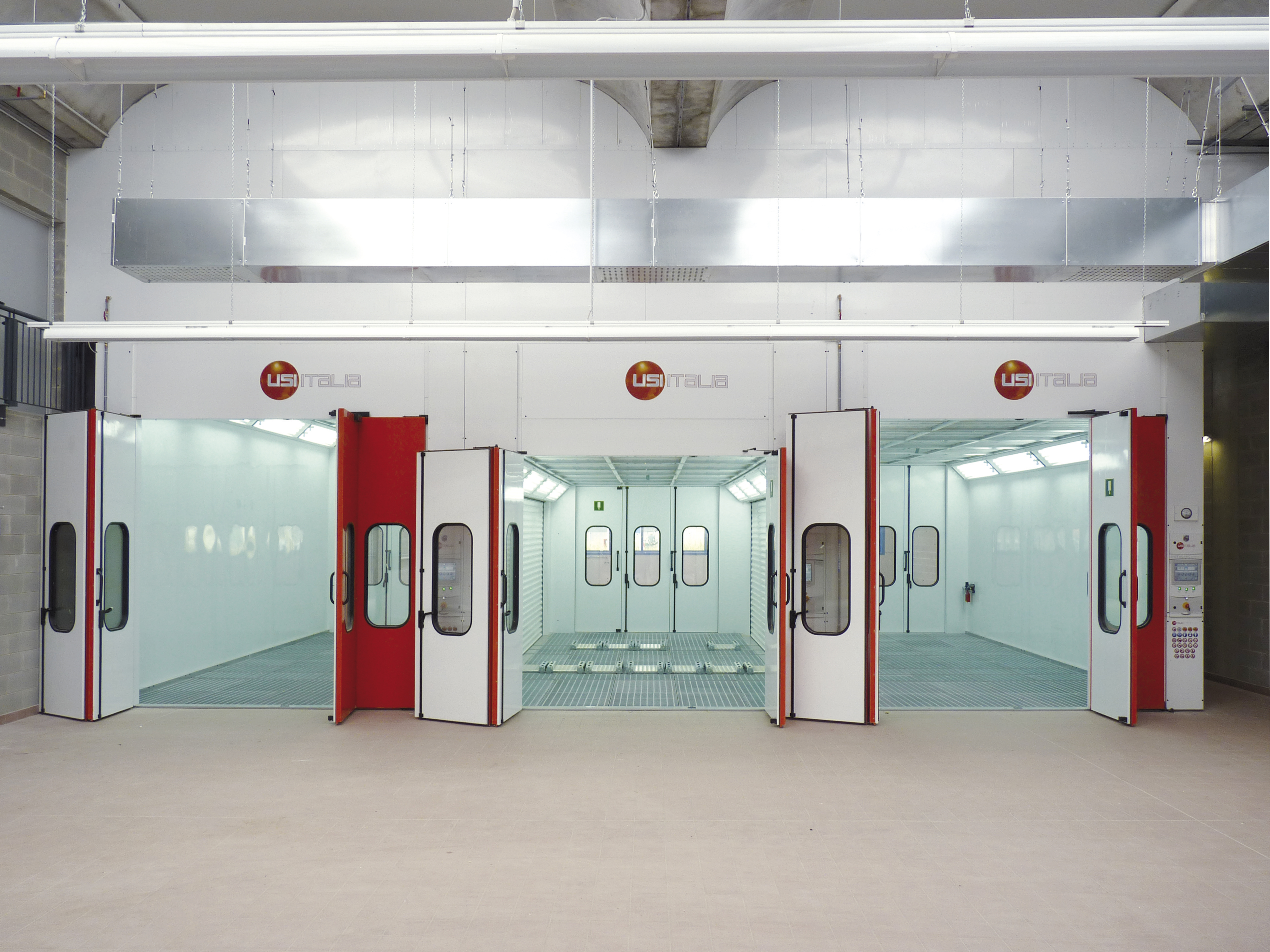
If you are buying or moving a spray booth in Florida, NFPA 33 is the standard your fire marshal will check it against. NFPA 33 is the National Fire Protection Association’s Standard for Spray Application Using Flammable or Combustible Materials. It sets the rules for how a paint booth is built, ventilated, wired and protected from fire.
There is a timing issue worth knowing about. NFPA publishes a new edition every few years, and the newest is 2024. Florida does not enforce the newest edition. It enforces the edition named in state rule, which today is the 2018 edition. A proposed rule would move Florida to the 2021 edition on 31 December 2026. If your project is permitted around that date, it pays to know which edition your plans will be reviewed under.
What NFPA 33 Covers
NFPA 33 applies wherever flammable or combustible paints, coatings or powders are sprayed. That includes automotive paint booths, industrial finishing booths, open spray areas, paint mixing rooms and drying or curing equipment. It covers collision centers and industrial finishing plants alike, whatever the size of the operation.
The standard is enforced by the authority having jurisdiction, usually the local fire marshal or fire prevention office. They review your plans before the permit is issued and inspect the booth before it goes into use. Our guide to paint booth permits in Florida covers the full approval process. This article focuses on what NFPA 33 itself asks for.
Which Edition of NFPA 33 Applies in Florida
| Edition | Status in Florida |
|---|---|
| NFPA 33, 2018 edition | In force now. Adopted through the Florida Fire Prevention Code, 8th Edition, under Florida Administrative Code rule 69A-3.012. |
| NFPA 33, 2021 edition | Proposed. The State Fire Marshal’s notice of proposed rule lists the 2021 edition with a proposed effective date of 31 December 2026. |
| NFPA 33, 2024 edition | Current NFPA edition. Not adopted in Florida. |
Two practical points follow from this. First, “meets the latest NFPA 33” is not the right question to ask a supplier. What matters is the edition your fire marshal enforces. Second, if your permit application goes in late in 2026, ask the fire marshal early which edition they will review against, and make sure the booth documentation matches.
Core NFPA 33 Spray Booth Requirements
The figures below come from the 2018 edition, the one Florida enforces today. They are a summary, not a substitute for the standard or for your fire marshal’s review.
Booth Construction
- Walls, doors and ceilings must be noncombustible or limited-combustible, with smooth interior surfaces that do not trap residue.
- Steel panels in a single-skin booth must be no thinner than 1.2 mm (0.0478 in.). In a double-skin booth, each sheet must be at least 0.9 mm (0.0359 in.).
- Aluminum cannot be used for structural members, enclosing walls, ceilings or exhaust ductwork.
Clearances
A spray booth needs at least 3 feet of clear space on all sides and above, free of storage and combustible construction. There are exceptions, for example where the booth sits against a wall with a 1-hour fire rating, as long as the booth can still be cleaned and maintained.
Ventilation and Interlocks
- The exhaust system must keep vapor concentration below 25 percent of the lower flammable limit.
- Ventilation must run whenever spraying is under way, and long enough afterward to clear vapors while coatings dry.
- Automated spray equipment must be interlocked so it cannot run unless the exhaust fans are running.
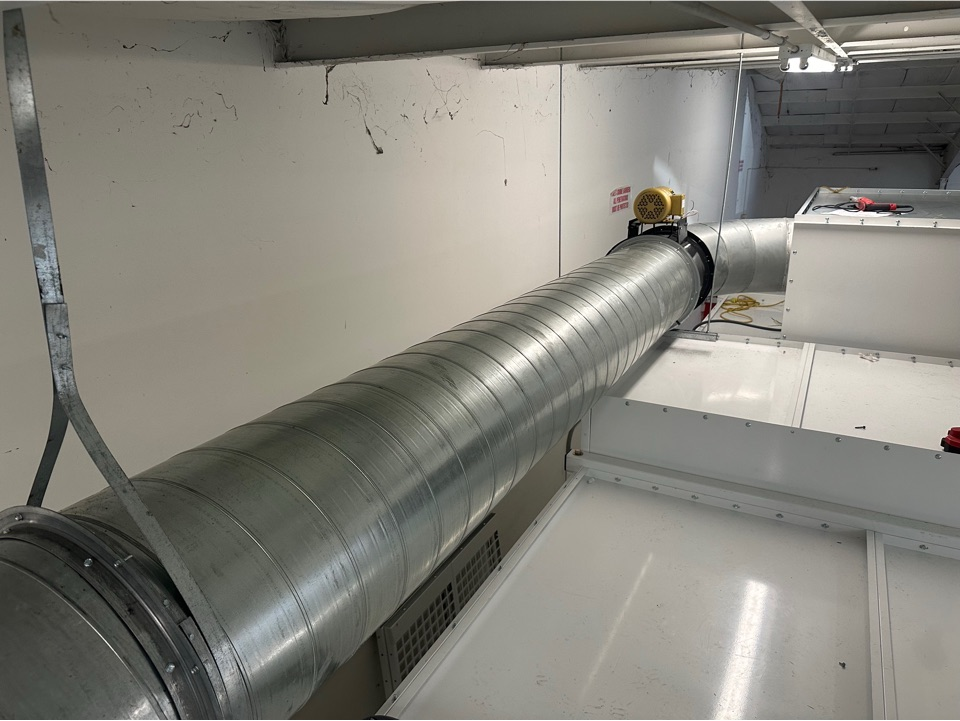
- Exhaust must go directly outside by the shortest route. The discharge point must sit at least 6 feet from exterior walls and roofs, 10 feet from building openings and 10 feet above grade.
- The booth needs a clean supply of make-up air that does not pull exhaust back in.
Electrical Classification
The inside of a spray booth is a Class I, Division 1 hazardous location, so wiring and equipment inside must be rated for it. The area within 3 feet of any booth opening is Class I, Division 2. Lighting is usually mounted outside the booth behind sealed glass panels, which keeps fixtures out of the classified space.
Fire Protection
Spray areas must be protected by an approved automatic fire protection system, typically sprinklers or a pre-engineered dry chemical system. Portable fire extinguishers are also required. Your fire marshal will check the system design, and the booth controls must work with it.
Mixing Rooms, Filters and Housekeeping
- A paint mixing room is limited to 150 square feet of floor area and needs its own ventilation and fire protection.
- Overspray filters must be easy to remove and replace, and should be changed before loading starts to affect airflow.
- Residue has to be cleaned off booth surfaces regularly. Our paint booth cleaning schedule sets out daily, weekly and monthly tasks.
Where ETL Listing Fits
NFPA 33 sets the rules. A third-party listing, such as ETL, shows that a booth design was tested and built to them. Many Florida fire marshals expect a listed booth, and an unlisted booth can be difficult or impossible to permit.
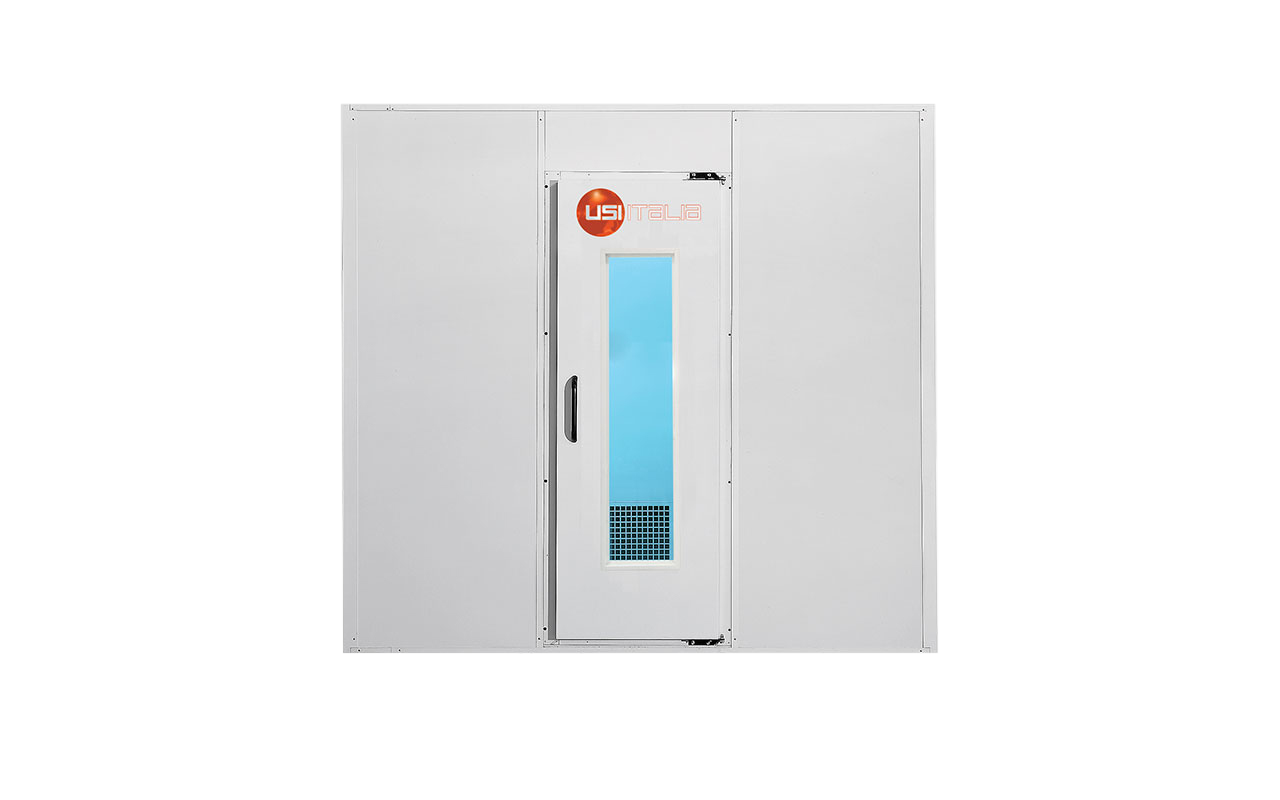
The booth lines Southern Booth and Equipment sells are listed: USI booths are ETL listed, GFS booths are ETL listed and Kayco booths are field listed. Ask for the listing documents with any quote, from any supplier, before you commit.
Planning a Booth Project Around the 2026 Change
If you are planning a new booth, a relocation or a major upgrade over the next few months, a few steps reduce the risk of plans coming back:
- Confirm with your fire marshal which edition of NFPA 33 they will review against, and note the date.
- Get the booth’s listing documents, layout drawings and exhaust details before you apply.
- Plan fire protection, electrical classification and the exhaust discharge point together, not one at a time.
- Keep the commissioning records. Airflow, pressure and filter readings taken at startup are what an inspector asks for later.
How We Handle NFPA 33 on Installations
Southern Booth and Equipment installs paint booths across Florida under Florida contractor licence CGC1541607. Booth selection, airflow, interlocks and clearances are specified against NFPA 33 requirements, and we pull the permits and coordinate inspections as part of the job. At startup our technicians record airflow, pressure and filter readings and hand them over with the booth.
See how a project runs on our paint booth installation page, browse spray booths, or check our certifications. To talk through a project, call (866) 416-4016 or request a consultation.
Frequently Asked Questions
Does NFPA 33 apply to small shops?
Yes. NFPA 33 applies wherever flammable or combustible coatings are sprayed, whatever the size of the shop. A single-booth collision center and a large finishing plant follow the same standard.
Who enforces NFPA 33 in Florida?
Your local fire marshal or fire prevention office, as the authority having jurisdiction. They apply the edition adopted in the Florida Fire Prevention Code, currently the 2018 edition.
Is the 2024 edition of NFPA 33 required in Florida?
No. Florida enforces the 2018 edition today. The state has proposed moving to the 2021 edition from 31 December 2026. The 2024 edition has not been adopted.
Do I need a new booth when Florida adopts the 2021 edition?
Not automatically. A code change mainly affects new installations and major changes reviewed after it takes effect. If you are planning work around the change date, ask your fire marshal how they will treat it.