
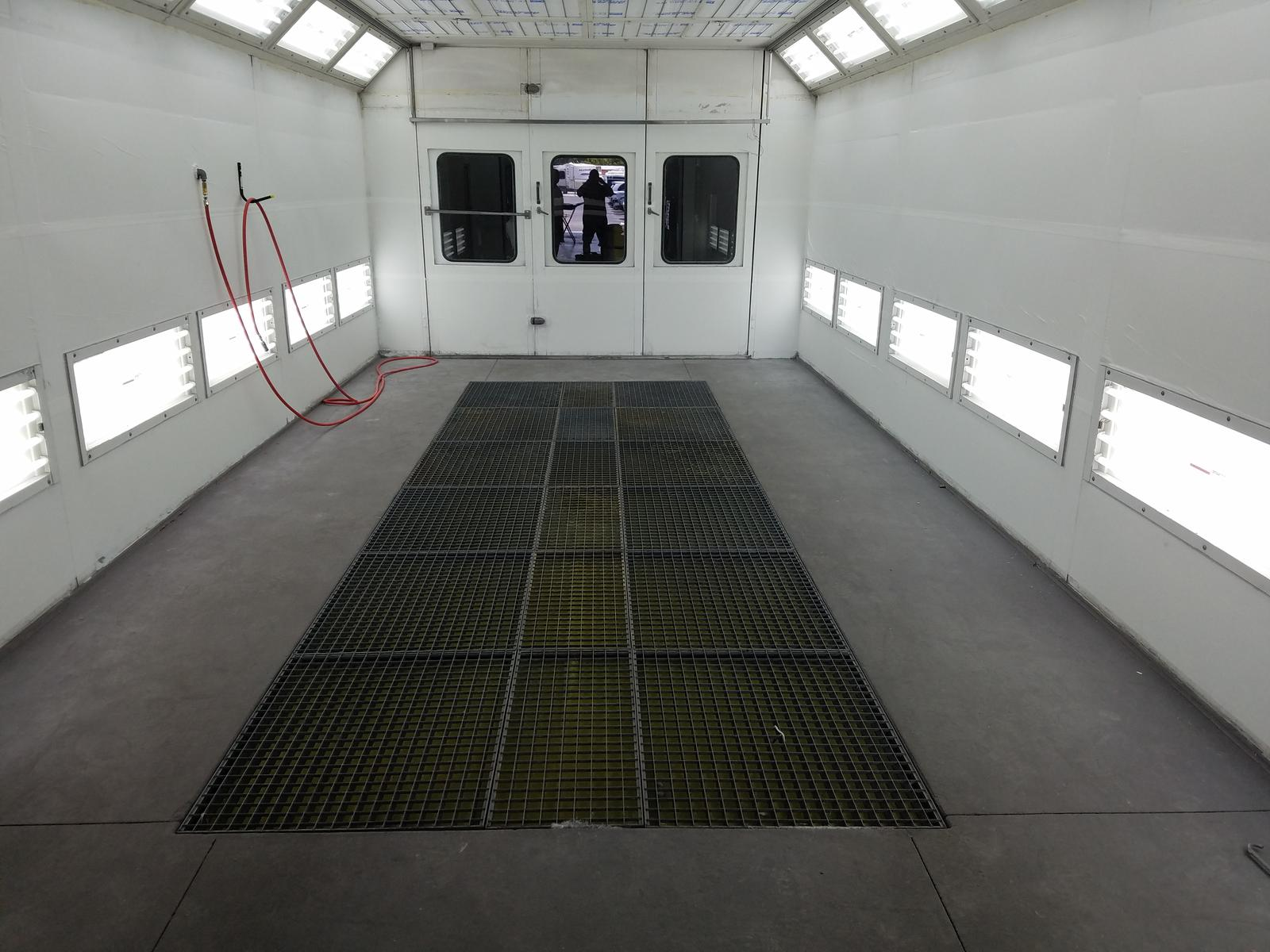
Most buyers, from collision centers to industrial finishing plants, start asking about a paint booth permit in Florida after they’ve already picked the equipment. If you plan to install a paint booth, flip that order. Permits decide where the booth sits, how it’s ducted and wired, and how long the project takes. Florida has no single permit that covers a paint booth from start to finish. Instead, three separate regulatory bodies each own part of the decision. Southern Booth and Equipment handles paint booth installation in Florida and builds the approval package into the quote.
The short answer for Florida shops and plants
Yes. Almost every paint booth needs a permit or approval of some kind. That’s true whether it’s an automotive paint booth in a collision center or industrial equipment in a manufacturing plant. The permits you need depend on your jurisdiction, your booth model and what you spray.
Most national guides skip Florida’s rules. The state code is clear. Florida adopts NFPA 33, 2018 edition, Standard for Spray Application Using Flammable or Combustible Materials as part of the Florida Fire Prevention Code. Your booth has to comply with it.
The state sets the standards, and your city or county enforces them. So what you need is approval from local authorities. They check your plans against state rules plus any local regulations on top.
Three authorities decide whether your booth gets approved
Each one reviews a different part of the same job. Missing one can stall the whole project.
Your local building department
Installing a booth usually means electrical and utility connections plus mechanical work. It can also mean exhaust openings through a wall or roof, and sometimes structural changes. Your local building department controls that work. It will also want drawings of where the booth sits. Local laws vary by jurisdiction, so get the permit requirements in writing before you order equipment.
Your local fire official and NFPA 33
The State Fire Marshal adopts the Florida Fire Prevention Code every three years. Local fire officials enforce it in each county, city and special fire district. They typically work through fire departments or a fire marshal’s office. This is the fire code your booth is judged against.
The 8th Edition (2023) has been in force since December 31, 2023. A 9th Edition is working its way through adoption in 2026, so plans drawn now could later face a newer edition. Your community may also add local amendments. That’s why local regulations can give two shops in neighboring counties different answers. The code isn’t only for new buildings, either. Before applying it to an existing building, the local fire official decides whether there’s a threat to life or property. So an older booth isn’t automatically exempt.
The Florida Department of Environmental Protection
Spray painting releases volatile organic compounds. Anything that can emit an air pollutant is an air quality issue. In Florida, surface coating operations can run under an air general permit, set out in Rule 62-210.310(4)(c) of the Florida Administrative Code. This is an authorization by rule, so DEP doesn’t issue a separate document. You can register online, and that registration is how your facility uses the permit to operate.
Whether you need an air quality permit at all depends on your coatings. Smaller shops may qualify for an exemption under Rule 62-210.300(3)(a)(27). It applies if your coatings contain 5.0 percent VOC by volume or less. It also applies if coatings above that level add up to no more than 6.0 gallons per day, averaged monthly, counting the solvents and thinners used for cleanup. Either way, no unit-specific requirement can apply.
Broward, Duval, Hillsborough, Miami-Dade, Orange, Palm Beach, Pinellas and Sarasota counties run their own local environmental programs for air. Every other county works through a DEP district office.
Federal rules that apply alongside state or local approvals
Two federal agencies add their own rules. Neither issues a booth permit, but your operation still has to follow both.
The Occupational Safety and Health Administration (OSHA) sets workplace safety regulations for spray finishing under 29 CFR 1910.107. It covers how booths are built and the need for proper ventilation. It also covers keeping sparks and flames away from flammable chemicals. The goal is to prevent fire and explosion in the spray area.
The Environmental Protection Agency (EPA) regulates hazardous air pollutants from automotive refinish work under 40 CFR Part 63, Subpart HHHHHH. This EPA emission standard is usually called the 6H rule. It targets coatings that contain compounds of chromium, lead, manganese, nickel or cadmium, known as target HAP. Your safety data sheets tell you whether your coatings contain them. If you spray none of them, you can file a simple notification saying so.
What NFPA 33 controls in a spray booth
The standard covers these areas:
- Booth construction and the materials it’s built from
- Ventilation systems and airflow through the spray area
- Exhaust filtration and ducting, including route and clearances
- The classified electrical zone and fixtures in and near the booth
- Fire suppression systems protecting the booth and the duct
- Clear space around the booth and separation from the rest of the shop
- Storage and handling of flammable and combustible liquids nearby
A gap in any one of these can send your plans back for changes.
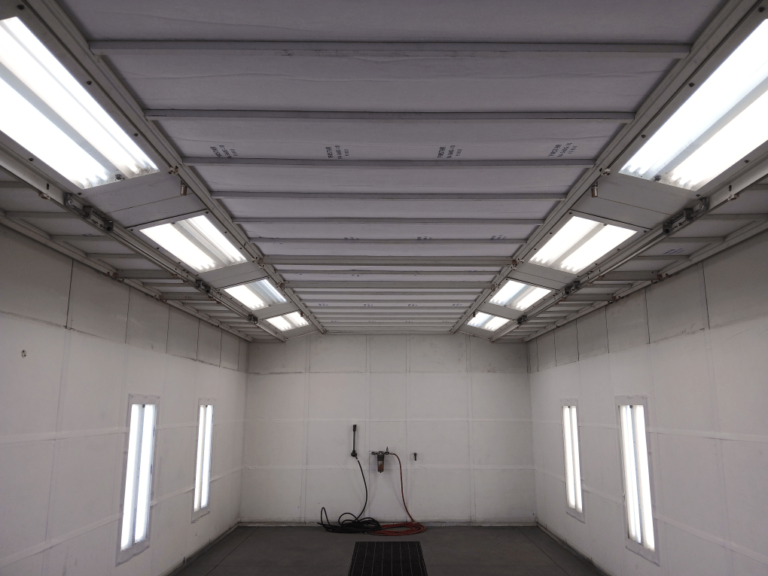
Check the booth is ETL listed before you buy
Florida authorities are increasingly asking for proof that the booth itself has been tested by an independent laboratory. ETL is the certification mark from Intertek, one of OSHA’s Nationally Recognized Testing Laboratories. A booth carrying it has been tested against the applicable safety standards and labeled by a third party. UL is the other mark you will see, and it does the same job for a reviewer. So does cTUVus, from TÜV Rheinland, another Nationally Recognized Testing Laboratory. Any of the three answers the same question for a plans examiner: has someone independent tested this equipment.
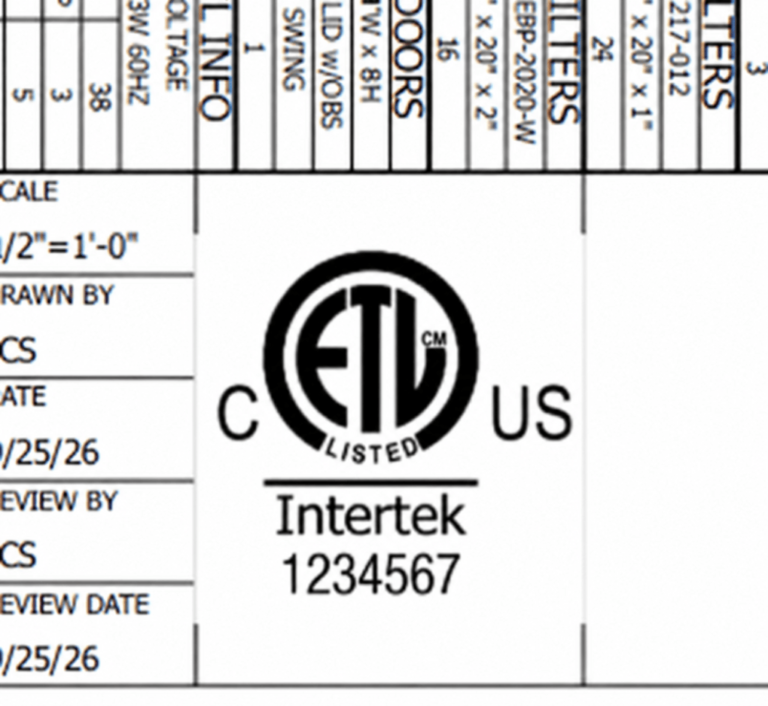
Not every manufacturer sells listed booths. Plenty are built to the standard but never submitted for third-party testing, so there is no factory label and no listing document to hand over. A listing gives the building department and the fire official an independent test result instead of the manufacturer’s word. Without one, expect requests for engineer-sealed calculations, a field evaluation by an approved agency, or in some jurisdictions no approval at all.
There is a second route, and it is a legitimate one. Where a booth is not factory listed, a Nationally Recognized Testing Laboratory can evaluate and label the specific unit after it is installed. That is a field listing. It satisfies the same reviewer, provided someone arranges it and builds it into the schedule. The trouble starts when nobody does, and the question first comes up at plan review with the booth already on site.
We have seen listing come up on jobs in Orlando and the rest of Orange County, and in Miami and Miami-Dade County. In both, a booth with no independent label is a slow permit at best.
So ask two questions before the purchase order goes out. Is this exact model listed by an independent laboratory, and can I see the listing alongside the cut sheets? If the answer is no, who is arranging the field listing and when. A supplier who has thought about it will answer both on the spot.
For the booths we sell: every standard and custom industrial spray booth from Global Finishing Solutions is ETL listed, and USI booths are ETL listed. Kayco is working through ETL listing now, so we field list the Kayco booths we sell.
The documents to prepare before you apply
Getting the paperwork for your paint booth setup right the first time saves time. Have these ready before you apply for the necessary permits:
- A floor plan showing the booth in place, with clearances marked
- Mechanical drawings of the exhaust run, make-up air and any roof or wall openings
- Electrical drawings showing the classified area and the circuits serving the booth
- Manufacturer cut sheets, plus the booth’s ETL, UL or cTUVus listing, or the field listing paperwork if the unit is labeled on site
- Product data on the coatings you spray, which the air permit side will ask about
- Contractor license and insurance details for whoever does the installation
Choosing your finishing equipment first makes this easier. The cut sheets and specs come with the booth. Browsing spray booth options available in Florida early gives you documents to submit.
Where approvals stall
The same mistakes keep coming up:
- Buying the booth before checking the building. Ceiling height, column spacing and available power decide what fits.
- Buying a booth that was never listed, with no plan to field list it. No independent label means no easy path through plan review.
- Assuming a used booth is grandfathered. Moving a booth means new electrical and mechanical work, and the Florida Building Code requires permits for that.
- Leaving out the air side. Fire and safety permits don’t cover the DEP requirement.
- Guessing at another county’s rules. Local amendments are real, and they differ.
- Treating the exhaust as an afterthought. Where the duct runs affects structural, roofing and fire protection decisions all at once.
Since 2016, Southern Booth and Equipment has installed booths in Florida shops and plants, so the review questions are familiar.
What the code asks of you after the booth is running
Approval is a starting point, not the finish line. The inspection process continues after opening day. If a booth drifts out of compliance, a fire inspector can issue a warning, then a citation with a fine. Serious hazards can bring a shutdown order. The standard expects the booth to stay the way it was approved. That means overspray kept under control, filters changed on schedule, light fixtures kept clean, and records that prove the work is happening. A preventative maintenance program keeps the booth compliant on a calendar, not on memory.
Used filters need attention too. Filters loaded with coating residue may contain hazardous materials, and how you dispose of them depends on what’s in them. TCLP filter testing through an independent lab tells you which disposal path fits your operation.
Talk to Southern Booth and Equipment before you buy
The easiest way to handle a paint booth permit in Florida is to treat approvals as part of the installation, not paperwork you chase later. Southern Booth and Equipment is a licensed and insured installer, license number CGC1541607, serving shops and plants statewide from its base in Stuart. Ask for the permit package to be scoped in your installation quote. Then you’ll know what your building department, fire official and air program each need before the booth is ordered.
Call (866) 416-4016 or send Southern Booth and Equipment a message to get started.