
In an auto body shop, the air compressor runs almost all the air tools: spray guns, sanders, impact wrenches, blow guns and the paint booth's own controls. Pick one that is too small and paint jobs suffer the moment two technicians pull air at once. Pick one without clean, dry air and you get fisheyes and rework. This guide covers how to size an air compressor for body shop work, which type to choose and how to keep the air fit for paint.
What Size Air Compressor Do I Need for Painting Cars?
Air compressors are sized by how much air they deliver, in cubic feet per minute (CFM), at a stated pressure, usually 90 psi. Tank size and horsepower matter less than delivered CFM.
Start with the spray gun. A typical HVLP spray gun uses around 8 to 14 CFM to atomize basecoat and clear coat properly. Then add everything else that could run at the same time:
- List the pneumatic tools in the shop, including spray guns, impact tools, blow guns, the grinder and the DA sander.
- Note each tool's CFM at its working pressure, from the manufacturer's data.
- Work out the total CFM of the tools running simultaneously, not every tool you own.
- Allow extra capacity for growth and for the gradual wear that reduces compressor output.
As a rough guide from published sizing charts, a single-bay professional shop often needs around 15 to 18 CFM, and a two to three bay production shop around 25 to 35 CFM. Larger collision centers with multiple technicians at several paint and prep stations need more. Your own tool list, and the CFM demand it adds up to, is the number that counts.
Is a 60 or 80 Gallon Tank Enough?
The tank stores air, it does not make it. A 60 gallon tank gives roughly 90 seconds of continuous spraying before the pump has to compress more air to catch up, and the larger tank around two minutes. That is fine for a small job, but trying to paint a full panel or a complete vehicle needs a compressor that makes enough air to keep up with the gun on its own. A 30 gallon compressor is too small for professional automotive paint work.
Rotary Screw or Piston: Which Kind of Air Compressor?
Most collision shops choose between a two stage piston compressor and a rotary screw compressor.
| Piston (reciprocating) | Rotary screw | |
|---|---|---|
| Duty cycle | Around 50 to 75 percent. Needs rest time | Designed for continuous duty, up to 100 percent |
| Typical service life | Around 15,000 to 20,000 hours | Often 60,000 hours or more |
| Noise | Louder | Quieter, can sit closer to the work |
| Upfront cost | Lower | Higher |
| Best fit | Smaller shops with intermittent demand | Busy shops with several technicians on air all day |
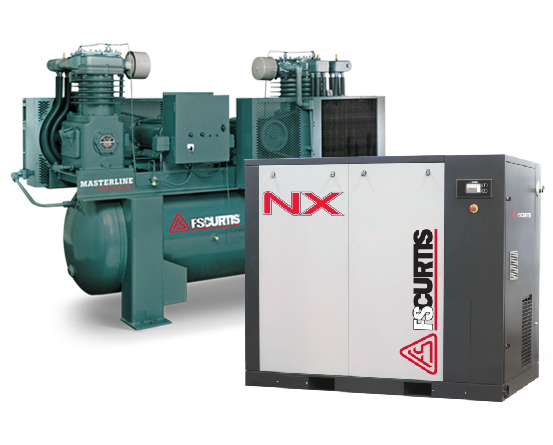
A two stage piston compressor is a cost-effective choice for a one or two bay shop, often at around 5 hp, with busier shops moving up to 7.5hp and beyond. Rotary screw compressors are designed for continuous-duty work, so once air demand is steady through the day and several tools operate at once, an industrial-grade rotary screw unit usually pays back through longer life, lower noise and better efficiency. We supply FS-Curtis reciprocating and rotary screw air compressors, so we can match the machine to the shop rather than the other way round.
Power and Pressure
- Three-phase power. Larger compressors, especially rotary screw units, usually need three-phase power. If your building only has single-phase, factor the electrical work into the budget.
- Working pressure. Many shop compressors run at around 125 to 175 psi in the tank and regulate down at the point of use. The spray gun needs far less at the air cap, so a good regulator at the booth and steady pressure across the air lines matter more than tank pressure.
- Location. Put the compressor in a shaded, well-ventilated room off the shop floor. Hot intake air makes any compressor work harder, and Florida summers are hard on compressor rooms. A vertical air compressor saves floor space, while a horizontal air compressor sits lower and is easier to service.
Clean, Dry Air for Automotive Paint
Moisture and oil in the air supply will ruin your paint. Water causes blistering and blushing, and oil causes fisheye craters that mean sanding and a repaint. Florida's humidity means a compressor pulls in a lot of water, and all of it has to come out before the air reaches the spray gun.
- Refrigerated air dryer after the compressor, cooling the air to a pressure dew point of around 35 to 40°F so water condenses and drains away. An undersized dryer lets water through on hot days, so size it to the compressor's full output.
- Coalescing filters to remove oil aerosol, especially with an oil-lubricated piston or rotary screw compressor.
- Automatic drains on the tank, dryer and filters.
- Point-of-use filtration and regulation at the paint booth, with a desiccant stage for waterborne paint or premium clear coat. Clean air also gives better atomization at the gun.
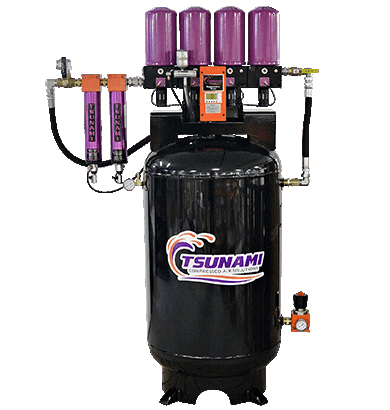
The rest of the compressed air system matters too. Undersized or rusting pipe causes pressure drops and puts scale in the air, which is why many shops now use aluminum piping. Our guide to compressed air piping for paint shops covers layout, materials and drains.
Keep the Compressor and the Shop Running
A shop compressor works hard every day, and like most repair shops, a collision shop loses money for every hour the air is off. Regular oil and filter changes, drain checks, belt checks on piston units and leak checks on the shop air lines keep it efficient and avoid the breakdown that stops the shop. Our preventative maintenance plans cover compressors and dryers alongside your paint booth, on a schedule built around your equipment.
Get the Right Air Compressor for Your Shop
Southern Booth and Equipment sizes, supplies and installs complete compressed air systems for collision centers and finishing plants across Florida, from FS-Curtis compressors and Tsunami dryers and filters to Prevost piping. Shop owners can tell us their tools, bays and plans for growth, and we will recommend a system that keeps up. Call (866) 416-4016 or see our installation services.
Frequently Asked Questions
What is the best air compressor for auto body work?
For a busy shop with several technicians, a rotary screw unit with a refrigerated dryer and proper filtration. For a one or two bay shop, a piston compressor of the right CFM can be enough.
What size air compressor for an auto shop?
An auto shop air compressor should cover every tool that runs at the same time, plus extra for growth. As a rough guide, most automotive shops with a single bay need around 15 to 18 CFM, and a two to three bay production shop around 25 to 35 CFM.
Can you paint a car with a 30 gallon air compressor?
Not well. Most 30 gallon compressors cannot deliver the steady CFM an HVLP spray gun needs for a full panel or vehicle, so pressure drops mid-coat and the finish suffers.
Do I need an air dryer for painting?
Yes. Water in the air line causes paint defects, and in Florida's humidity a compressor produces a lot of it. A refrigerated air dryer plus filters is the minimum for professional paint work.