
A new compressor gets most of the attention, but compressed air piping decides what actually reaches the spray gun. Pipe that is too small, the wrong material or laid out badly costs you pressure, lets water through and puts rust or oil into the paint. In a Florida shop, where the air is hot and humid most of the year, the piping has a lot of water to deal with.
This guide covers how to plan a compressed air piping system for a paint shop or finishing plant: working out demand, choosing pipe, laying out the main, handling moisture and cleaning the air before it reaches the booth.
Start With How Much Air You Use
Size the system from demand, not from the compressor you already own. List every tool and spray gun that could run at the same time, with its air use in cubic feet per minute (CFM) at the pressure it needs. An HVLP spray gun typically uses around 8 to 14 CFM. Sanders, blow guns and booth controls add to that.
Add up the tools that really run together, then allow room for growth. A second booth or a few more bays later should not mean ripping out the main line.
Choose the Right Type of Pipe
The piping material decides how clean the air stays, how much pressure you lose and how easy the compressed air piping system is to change later. Here is how the common options compare.
| Material | Strengths | Watch out for |
|---|---|---|
| Aluminum | Light, corrosion-resistant, smooth inside so less pressure loss, modular fittings with no welding or threading | Higher material cost than black iron |
| Copper | Clean air, long life, widely available | Copper pipe costs more, and every fitting is soldered or pressed |
| Stainless steel | Very clean air, long life | Highest cost, and stainless steel pipes are usually welded |
| Black iron | Strong and familiar | Black iron pipe is threaded or welded and rusts inside, and rust scale ends up at the gun |
| Galvanized steel | Inexpensive | The galvanized coating can flake off inside and block filters and tools |
| PVC | None for compressed air | Can shatter under pressure. Do not use it |
PVC deserves its own warning. OSHA issued a hazard bulletin in 1988 on PVC pipe in above-ground installations, citing the Plastic Pipe Institute’s recommendation against using thermoplastic pipe for compressed air in exposed locations. When it fails, it can break into sharp fragments. Some plastic pipe systems, such as certain HDPE products, are made and rated specifically for compressed air. General plumbing PVC is not one of them.
For most paint shops, aluminum pipe is the practical choice. It keeps air quality high, holds its inside diameter for years because there is no corrosion, and is easy to install and extend when the shop grows. We install Prevost aluminum piping systems for that reason.
Lay Out the Main as a Loop
A single straight run that dead-ends at the far side of the shop starves the last drop. A loop main, where the pipe runs around the shop and returns to where it started, feeds each drop from two directions. Pressure stays more even, and a high-use station at the end of the line no longer pulls the whole system down.
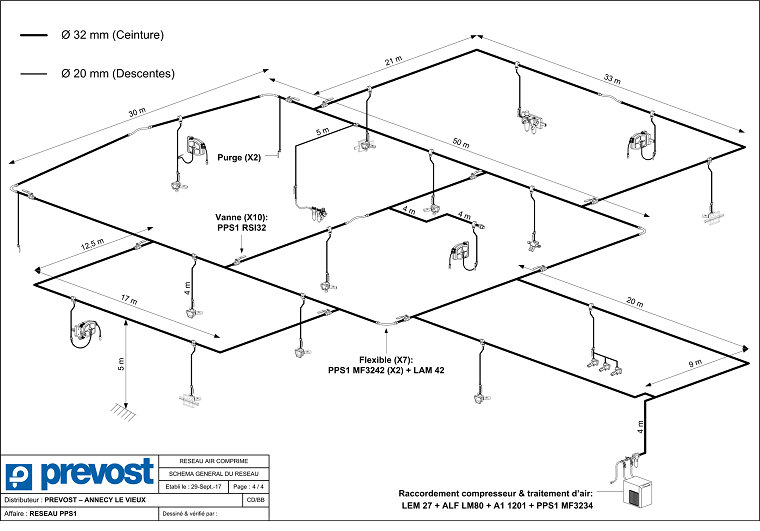
Good layout rules for the main:
- Size the pipe so air moves slowly. A common design guide is 20 feet per second or less at 100 psi.
- Aim for a total pressure drop of less than 3 psi between the compressor room and the furthest point of use.
- Put drops as close to each workstation as you can, so hoses stay short.
- Avoid sharp elbows and unnecessary fittings. Each one adds pressure loss.
- Fit isolation valves so one section can be worked on while the rest of the shop keeps running.
Slope, Drops and Drains
Compressed air cools as it travels away from the compressor, and water drops out of it. The layout should send that water to drains, not to your spray gun.
- Slope the main slightly downward in the direction of airflow, away from the compressor and toward a drain point.
- Take every drop off the top of the main, with a gooseneck, so water running along the bottom of the pipe does not fall into the drop.
- Extend each drop below the outlet to form a drain leg, with a drain valve at the bottom.
- Add drains at low points, at the end of each run, on risers and right after the compressor.
- Use automatic drains on the receiver, dryer and filters, so draining does not depend on someone remembering.
Clean and Dry the Air Before It Reaches the Booth
Water and oil in the air line cause fisheyes, blistering and poor adhesion. The piping layout removes some water. Treatment equipment removes the rest.
- Aftercooler and moisture separator right after the compressor, to drop the temperature and pull out bulk water.
- Refrigerated air dryer, which cools the air to a pressure dew point of around 35 to 40°F so most remaining water condenses and drains away.
- Particulate and coalescing filters to remove rust, dirt and oil aerosol, especially with an oil-lubricated compressor.
- Point-of-use filter and regulator at the booth, so the painter gets clean air at a steady pressure.
Shops spraying waterborne basecoats or premium clears often add a desiccant stage at the booth for drier air. We supply compressed air systems with Tsunami filtration packages and air dryers sized to the compressor.
Pipe Size, Pressure Drops and Air Leaks
Pipe size is where most shop systems go wrong. Air loses pressure as it rubs along the pipe wall, and the smaller the pipe and the higher the flow, the bigger the loss. A main that was fine for one booth and a few sanders can starve the whole shop once a second booth goes in. Size the main from the total CFM and the length of the longest run, then go one size up if growth is likely. The extra cost of a larger compressed air pipe now is small next to replacing the main later.
Leaks are the other quiet cost. Every leaking fitting, worn quick connect and cracked hose makes the compressor run longer to hold pressure. State energy agencies estimate that leaks can waste as much as 20 to 30 percent of a compressor’s output. Walk the system with the shop quiet once a month, listen for hissing and fix what you find. Modular aluminum piping helps here, because its mechanical fittings leave fewer threaded joints to work loose.
Common Compressed Air Piping Mistakes
- Running pipe that is too small, then turning the compressor pressure up to compensate. That wastes energy and still starves the far drops.
- Taking drops off the bottom or side of the main, which sends water straight to the hose.
- Skipping the dryer because the compressor “has a water separator”.
- Long hose runs from a single drop instead of a drop at each station.
- Mixing pipe materials and fittings from different systems.
- Using PVC or garden-grade plastic tubing.
Plan the Piping With the Compressor and the Booth
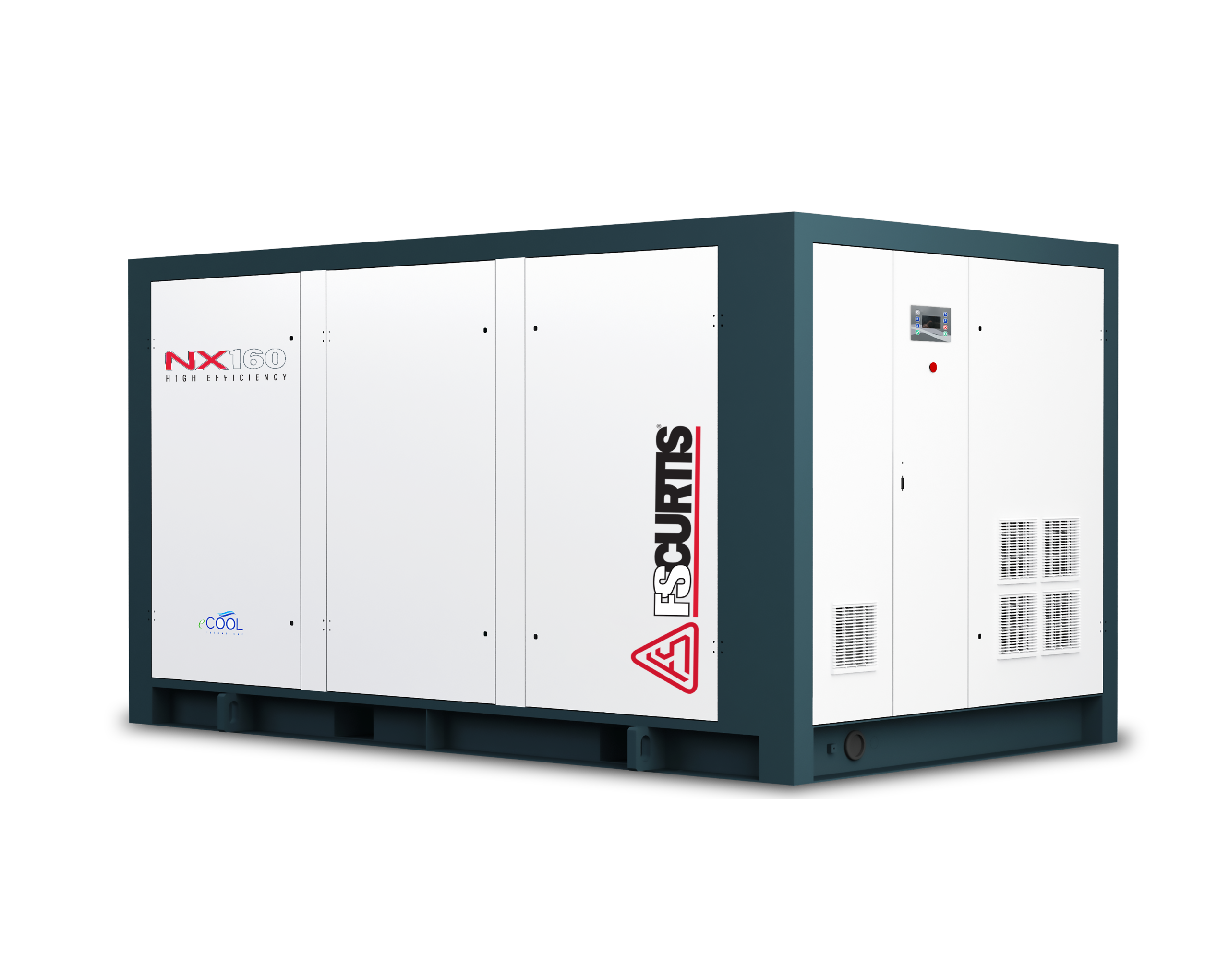
The air compressor, the compressed air piping system and the paint booth work as one compressed air system. Southern Booth and Equipment designs, draws and installs complete compressed air systems for paint shops and finishing plants across Florida, from FS-Curtis compressors through dryers, filters and Prevost piping to the point of use. We handle the layout so the booth gets the air it needs on day one, with room to grow.
Read more about our installation services, or call (866) 416-4016 to plan a new system or fix an existing one.
Frequently Asked Questions
What is the best pipe for compressed air in a paint shop?
Aluminum is the best fit for most paint shops. It does not rust, keeps a smooth bore for low pressure loss and is easy to extend. Copper and stainless steel also work well but cost more to install.
Can I use PVC for compressed air lines?
No. OSHA has warned against PVC and other thermoplastic pipe for compressed air in exposed above-ground piping, because it can shatter when it fails.
Can I use PEX for compressed air lines?
We do not recommend it. PEX is made and rated for water, not compressed air, so we treat it like other plastic pipe. Use a system designed for compressed air, such as modular aluminum.
What does OSHA say about compressed air in the shop?
Beyond the PVC warning, OSHA limits compressed air used for cleaning to less than 30 psi, with chip guarding and personal protective equipment. Fit a regulated blow gun rather than using full line pressure.
Should compressed air piping be sloped?
Yes. Slope the main slightly downward away from the compressor toward drain points, take drops off the top of the main and fit a drain leg at the bottom of each drop.
Is a loop better than a straight line?
In most shops, yes. A loop feeds each drop from two directions, which keeps pressure more even across the shop and reduces the pressure drop at the furthest station.